
Are Fabric Dome Shelters Effective In Lightning?
- December 10, 2025
- Posted by: Container Domes
- Category: Blog
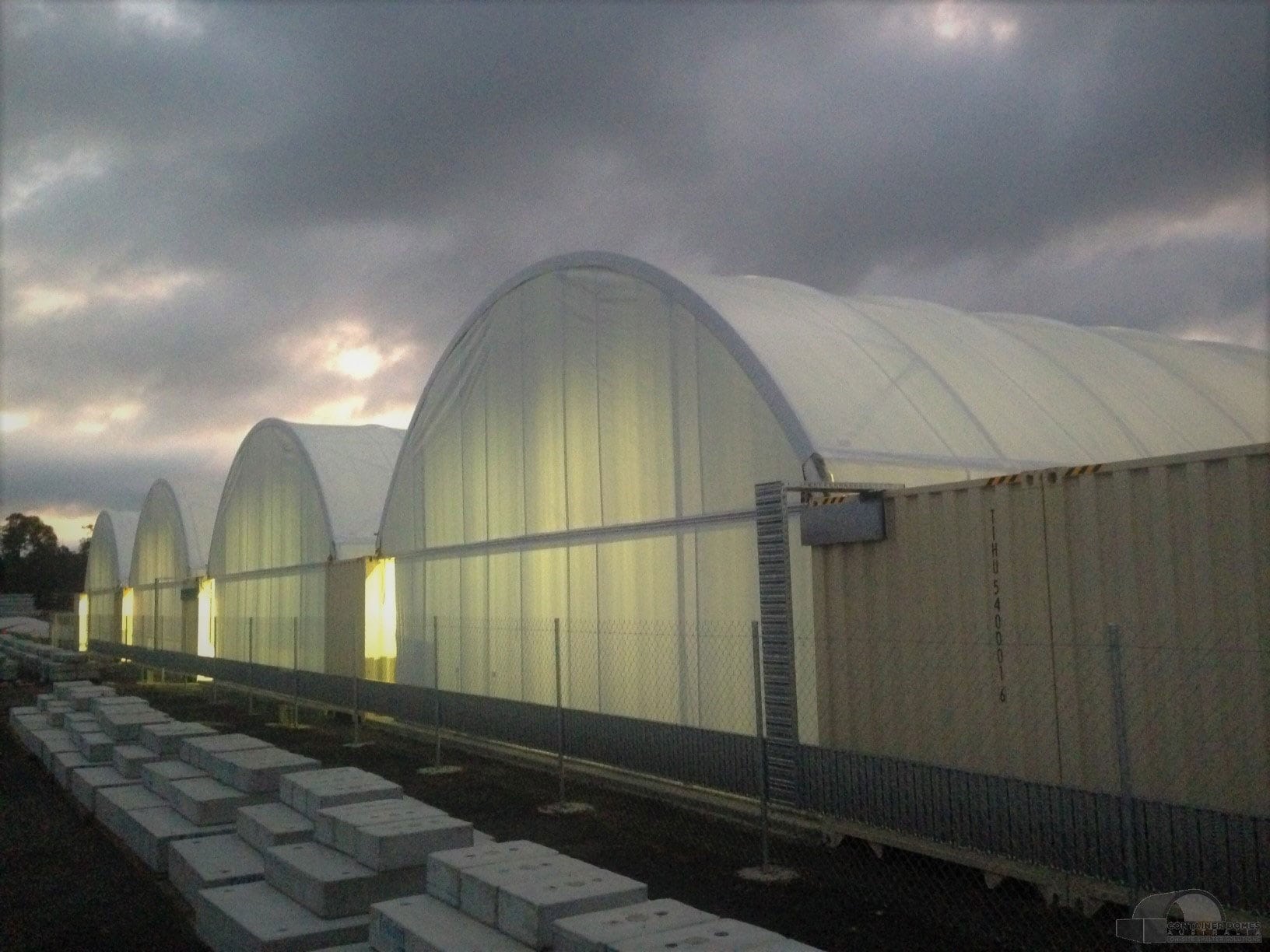
Fabric dome shelters are increasingly used across Australia’s mining, agricultural and industrial sectors for their structural strength and cost efficiency. But how do they perform during lightning events, especially in remote or open areas where strikes are more likely to occur?
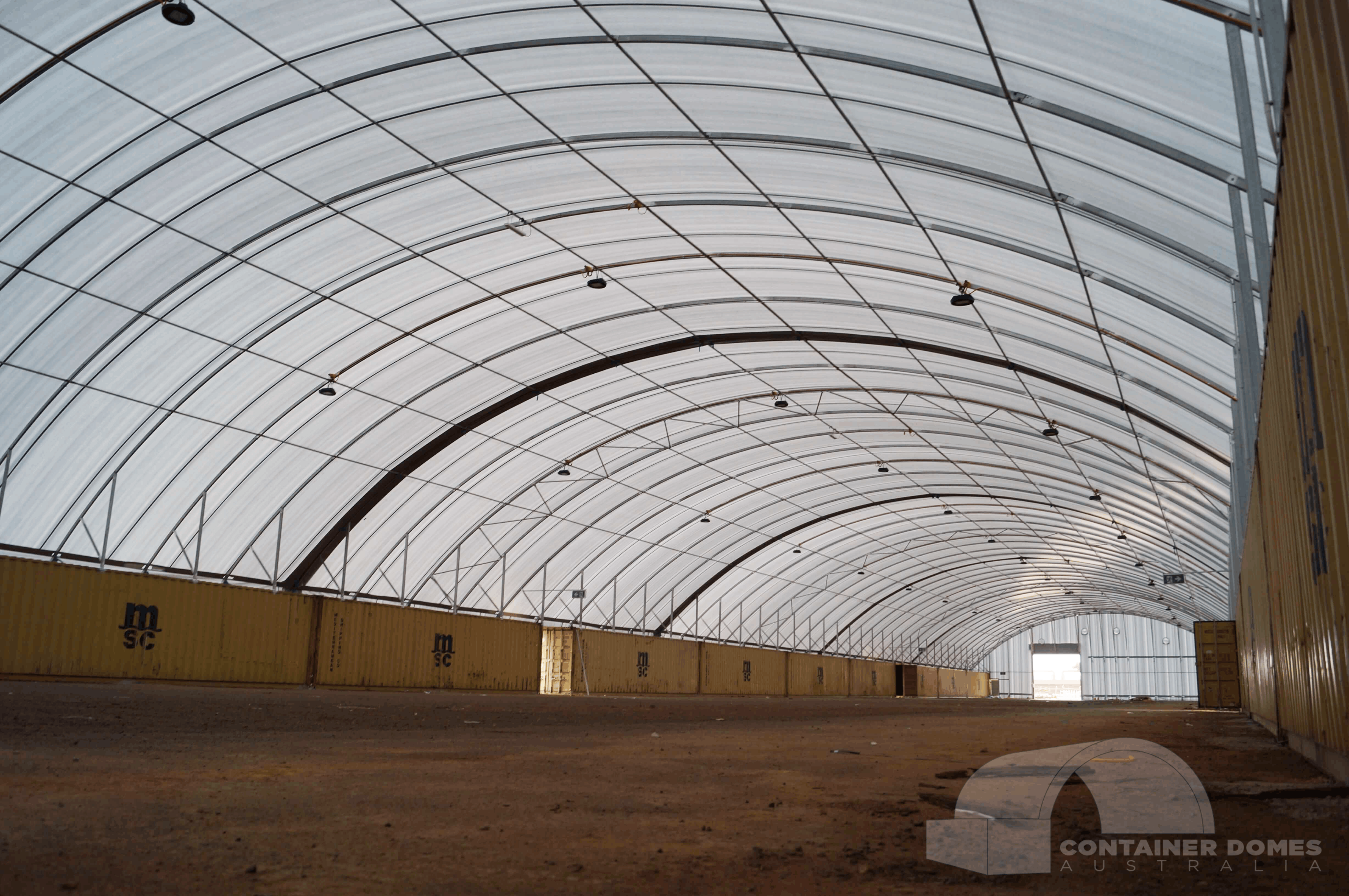
Before exploring the science behind lightning and metal structures, it’s important to understand how Container Dome Australia’s relocatable shelters are engineered. Each structure is designed to Australian structural standards, ensuring stability, strength and compliance in Wind Regions A, B, C or D. Their galvanised steel frames are precision-engineered for durability and corrosion resistance, and Canvacon® fabric membranes offer UV-stabilised, weather-resistant protection with warranties of up to 20 years against UV degradation and delamination.
For further technical insight, refer to our article on The structural integrity of container domes in Australia.
Understanding how lightning interacts with steel structures
Lightning is a natural electrical discharge that seeks the fastest path to the ground. Steel-framed structures, such as dome shelters, conduct electricity efficiently, meaning they can attract strikes if located in open or elevated areas. This does not make them unsafe by default; it simply highlights the importance of correct earthing and electrical grounding, which must always be designed and installed by a qualified, licensed electrician.
While galvanised steel conducts electrical current, it does not in itself protect against lightning. Contrary to common belief, a dome shelter’s frame does not act as a Faraday cage, as those are designed to block electromagnetic fields, not manage lightning energy.
In practice, a direct strike can damage external components or fabric membranes, but the structure’s steel framework and engineered footings can safely channel energy toward the ground when paired with appropriate grounding systems.
The role of engineered grounding systems
Container Dome Australia’s shelters can be integrated with engineered grounding systems where required for compliance or operational safety. These systems are typically designed and installed under electrical engineering specifications, not as standard inclusions. When professionally implemented, grounding reduces the risk of arcing or secondary electrical hazards by directing lightning current safely away from assets and personnel.
A safety tip: Electrical grounding design and installation must always be performed by a licensed electrician in accordance with AS/NZS 3000:2018 (Wiring Rules).
Clients operating in high-risk lightning zones, particularly in remote mining or regional areas, are encouraged to seek independent electrical assessment to determine appropriate grounding and surge-protection measures for their site.
Weather-resistant Canvacon® fabric performance
The fabric component of a dome shelter is not conductive; however, it can be damaged by extreme heat generated during a direct lightning strike.
Container Dome Australia offers a range of engineered fabric cover options to suit specific site requirements and compliance needs. Standard polyfabric membranes are engineered for high tensile strength and UV stability, while fire-resistant (FR) fabric options are available for sites with heightened fire-risk profiles or specific operational requirements. UV-stabilised membranes provide long-term weather protection, backed by up to 20-year UV and delamination warranties depending on the fabric specification selected.
When combined with robust steel framing and correct anchoring, these cover systems deliver a fit-for-purpose structural solution that performs reliably in harsh environments while meeting operational compliance requirements
Structural integrity and compliance considerations
All Container Dome Australia shelters are engineered to Australian structural standards, ensuring performance under specific regional wind and load conditions. These designs consider environmental stresses such as wind uplift, rainfall, and thermal expansion which are critical factors for maintaining integrity during electrical storms.
Structural design certification is completed by registered Australian engineers in compliance with the National Construction Code and relevant AS/NZS standards. And, while lightning performance is not directly addressed in these standards, adherence to them ensures the structure’s resilience against environmental forces that may occur during such events.
Maintenance and operational recommendations
Proactive maintenance supports the long-term reliability of any relocatable shelter. While electrical systems must always be handled by qualified trades, general inspection of visible components after severe weather helps ensure operational safety.
- Conduct regular structural inspections to identify corrosion, fastener movement or fabric wear.
- Engage a licensed electrician to inspect grounding systems and surge protection where installed.
- Maintain clear communication with your engineering and safety teams regarding compliance documentation and inspection records.
Maintaining compliance documentation, engineering certifications and electrical inspection reports helps mitigate risk exposure and supports your site’s audit readiness.
Outcome-focused design for demanding environments
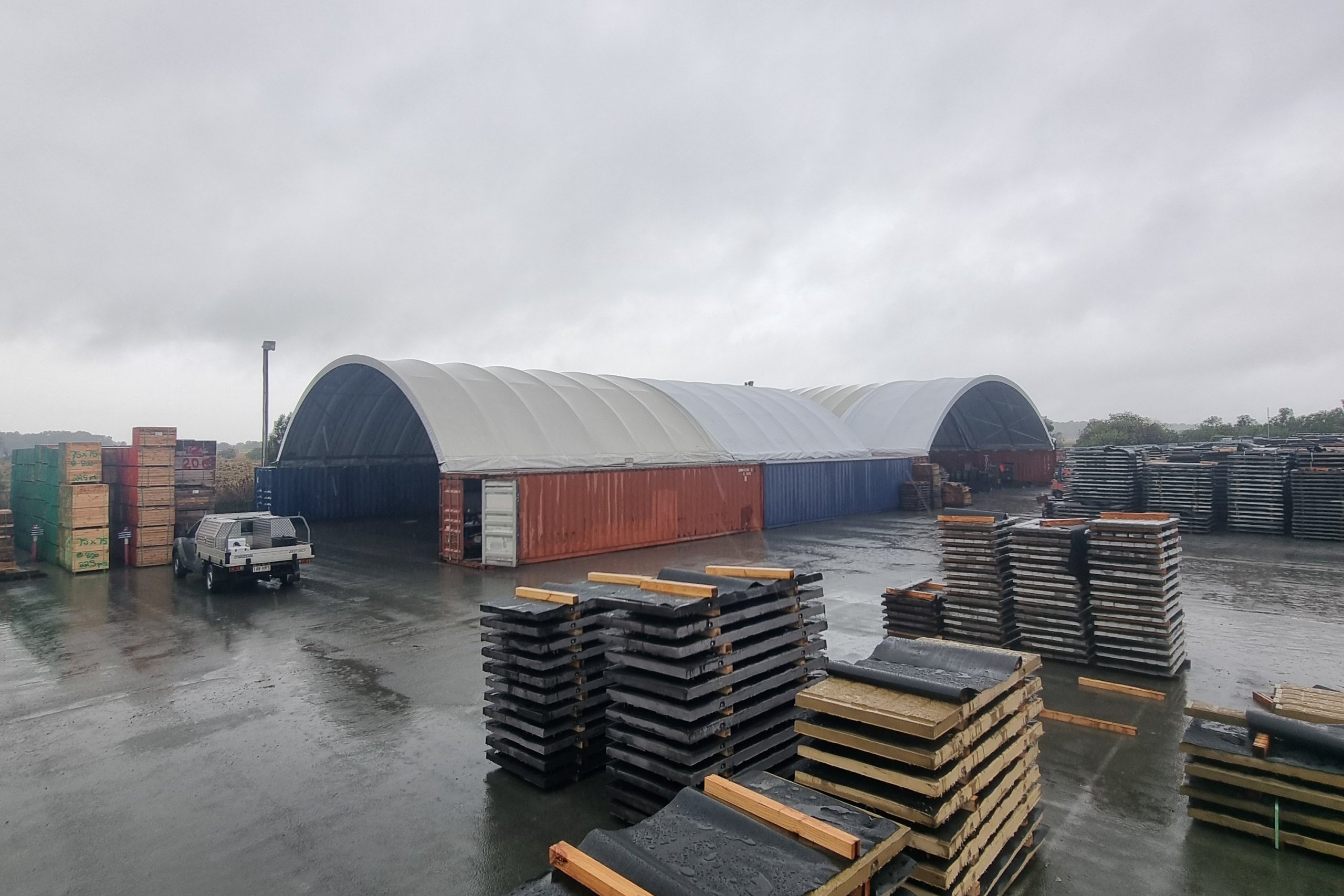
Container Dome Australia’s commitment to compliance, precision and safety underpins every design and installation. Each project is delivered under the company’s ISO 9001 and ISO 45001 certifications, ensuring rigorous quality management and occupational health and safety processes throughout fabrication and deployment.
For lightning-prone regions, this approach provides clients with confidence that every structural component is engineered for performance and verified for compliance, forming part of an integrated risk-management strategy for high-value assets.
Reliable performance begins with meticulous engineering and evidence-based design, not assumptions.
Key takeaway
Fabric dome shelters, when engineered, installed and grounded correctly, perform effectively in lightning-exposed environments. While the steel frame conducts electricity, its strength and compliance with Australian structural standards provide a stable, grounded foundation for asset protection.
By partnering with Container Dome Australia’s specialised engineering team, clients can ensure every aspect of their relocatable shelter, from structural design to electrical grounding, meets stringent operational, compliance and safety requirements.
Contact our specialists today on 1300 793 822 to discuss lightning protection for your site.