
Understanding The Wind Region Map For NSW
- December 18, 2025
- Posted by: Container Domes
- Category: Blog
Are you wondering what the wind region map for NSW means for your property?
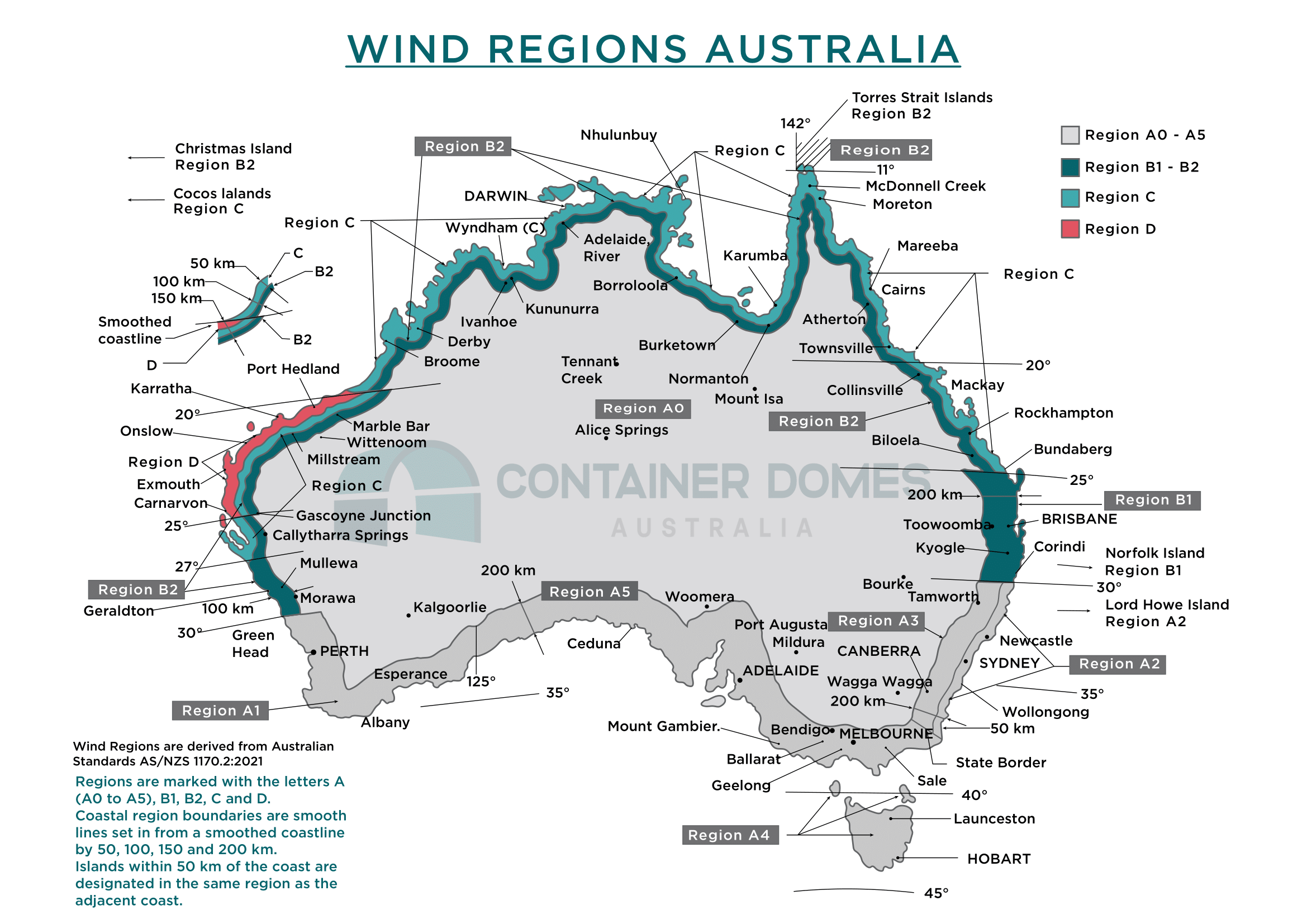
The wind region map for NSW shows which engineering standards your shelter needs to meet based on your location’s expected wind speeds. NSW is covered by two classifications: Region A (inland and most southern coastal areas), and Region B (northern coastal strip). And, understanding why these wind region ratings matter will help you choose the right infrastructure to actually protect your equipment and assets when severe weather hits.
Our container domes are now deployed across New South Wales properties, bringing our Sunshine Coast engineering expertise to deliver cyclone-rated protection for all NSW wind regions.
Where Does Your Property Fit? NSW Wind Regions Explained
Finding your property’s wind region is an important first step in selecting a compliant shelter. Under Australian Standard AS/NZS 1170.2, New South Wales is classified into Wind Region A and Wind Region B only, based on expected regional wind speeds:
| NSW Region | Wind Region | Key Towns/Areas |
| Sydney Metro | B | Sydney, Parramatta, Penrith, Camden |
| Central Coast | B | Gosford, Wyong, Tuggerah, The Entrance |
| Hunter Valley | A/B | Newcastle (B), Maitland (B), Singleton (A), Muswellbrook (A) |
| Illawarra | B | Wollongong, Shellharbour, Kiama |
| Southern Highlands | A | Bowral, Mittagong, Moss Vale |
| Central West | A | Bathurst, Orange, Dubbo, Cowra |
| Riverina | A | Wagga Wagga, Griffith, Albury |
| North Coast (NSW) | B | Port Macquarie, Coffs Harbour, Ballina |
| Far North Coast (NSW) | B | Byron Bay, Tweed Heads |
Wind Region A covers most inland NSW properties, including areas such as Dubbo, Orange, Bathurst, Wagga Wagga, and the Riverina. Structures in this region are typically designed for regional wind speeds up to approximately 45 m/s (162 km/h). While this is the lowest wind region classification, inland NSW still experiences severe storm events, including strong straight-line winds, heavy rainfall, and hail, making compliant engineering essential for asset protection.
Wind Region B applies to NSW coastal areas, including Sydney, the Central Coast, Newcastle, Illawarra, and the entire NSW North Coast. Structures in this region must withstand higher wind speeds of up to approximately 52 m/s (187 km/h), reflecting increased exposure to coastal storm systems, east coast lows, and cyclonic remnants.
Why Getting Your Wind Region Right Matters
Your property’s wind region affects more than just engineering specs. Insurance providers require compliant structures, and many NSW farm insurance policies need engineer certification for coverage. Council approval through DA or CDC processes checks wind ratings as part of compliance.
NSW weather patterns make proper engineering essential. East coast lows hit the coast from May to July, while summer storms affect both inland and coastal properties. The terrain across NSW varies significantly, from the Blue Mountains and coastal escarpments to the open western plains, creating different wind exposures even within the same region.
A properly certified structure like a container dome will protect your investment and add value to your property. This brings total peace of mind, because when severe weather damages under-engineered shelters across your area, your properly certified container dome will keep protecting what’s inside.
Choosing The Right Shelter For Your NSW Property
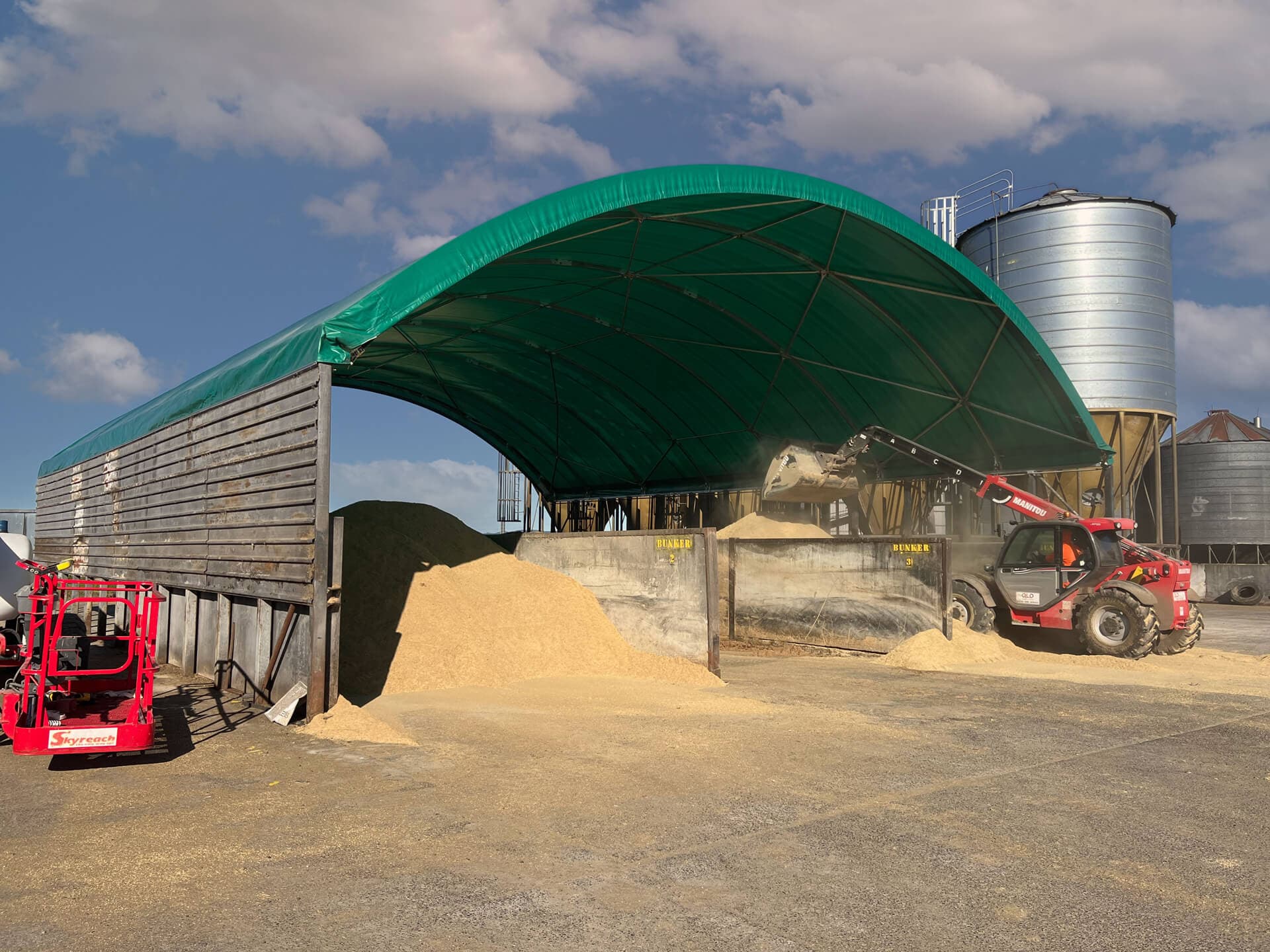
Container Domes Australia manufactures relocatable structures engineered specifically for NSW conditions. Our shelters are certified for your wind region, whether you’re protecting farm machinery in Dubbo, setting up covered storage on the coast, or establishing infrastructure for Hunter Valley vineyard or equestrian operations.
Our container domes are available in standard widths starting from 6 metres up to 21 metres. Length is fully modular, with structures able to be extended by joining bays (for example, combining multiple 12 x 12 modules to create extended covered space). Where standard sizes don’t suit, we also offer fully custom-engineered solutions to meet specific site, operational, or council requirements.
Applications across NSW rural properties include equipment storage, machinery protection, feed storage, livestock facilities, and covered work areas and our engineering adapts to your requirements and terrain category, every time, without compromising structural integrity.
What Proper Certification Delivers
Engineer certification means your shelter meets Australian standards for your wind region. Our shelters come with full engineer certification, 10-year structural warranty, and 20-year UV warranty on the cover, and that combination of proper engineering and backed guarantees means your investment will deliver long-term protection.
We’ve been experts in steel fabrication and structural design experience for over 11 years, so we understand rural and agricultural applications. ISO 9001 and ISO 45001 certification guarantees manufacturing quality and safety management throughout the process, and, importantly, every project includes engineered footing design, fabrication, and full certification. We also offer turnkey delivery options including installation coordination and final regulatory sign-off.
Finding Your Wind Region
To confirm your specific wind region, check the Bureau of Meteorology’s wind region resources or contact your local council for region requirements. Our specialists understand NSW-specific factors including terrain variations and appropriate hold-down options for your region, and are available to discuss which wind region applies to your NSW property and what shelter solution fits your requirements.
Simply call us on 1300 793 822, or contact our specialists for a free quote today.